Why drywall that feels dry can still be holding water
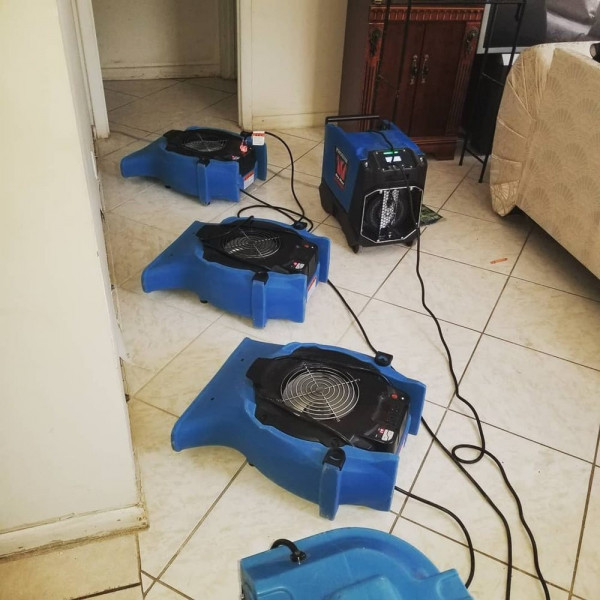
A wall can look fine, feel dry under your palm and still hold water. We see it after burst pipes, dishwasher leaks and basement floods in Denver homes. The first cleanup is done, and then a stain appears on the paint or the baseboard starts to smell.
Why the surface lies
Drywall is a gypsum core wrapped in paper. Both layers absorb water, and the core can pull it above the visible waterline. Paint and wallpaper slow evaporation from the face of the wall, so the surface dries first and the inside stays wet. A palm on the wall tells you about the paint, not about the core.
What sits behind it
Behind the drywall are insulation, studs and the bottom plate of the wall frame. Insulation holds water like a sponge, and the wooden bottom plate dries slowly. Denver's dry outdoor air helps a wet floor. A closed wall cavity hardly exchanges air with the room, so it dries much more slowly than the surface does.
How we check a wall
A moisture meter reads the material itself. A pin meter measures at the points where its pins touch the wall, and a pinless meter reads through the surface without making holes. A thermal camera adds a map. Wet material is often cooler than dry material because water evaporates from it, so a cold patch shows where to take readings. The camera does not measure moisture, so every cold patch gets a meter reading before anyone decides what to cut.
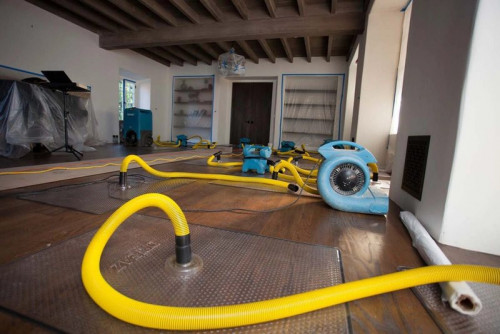
We also take a reading from a wall in the same home that was never wet and use it as the dry standard. The affected wall counts as dry when its readings match that standard. It does not count as dry when it merely feels dry.
Signs worth a second look
Paint that bubbles or peels, a baseboard that has swelled or pulled away from the wall, a stain that comes back after you wipe it, a musty smell and a wall that feels cooler than its neighbors are the usual ones. None of them proves a wall is wet, and a wet wall can show none of them. Any one is a reason to measure.
What to do before a crew arrives
- Shut off the water source. If outlets or cords are wet, switch off the breaker for that area.
- Mark the edge of any stain with a pencil and write the date beside it. A line that moves later means the water is still spreading.
- Photograph the wall, the floor and any wet belongings, each with one wide shot and one close-up.
- Do not paint or caulk over a stain. Sealing a wet wall traps the moisture inside it.
Why the same day matters
The EPA says that mold generally does not grow when wet material is dried within 24 to 48 hours. Past that window the risk goes up, and a wall that stayed wet for days may need mold remediation as well as drying. So a wall that is probably fine deserves a measurement on the day of the leak.
Looking for water damage repair Denver homeowners can call at any hour? Our main page walks through how a drying job runs, from the first moisture map to the final readings.
If a wall in your home stays cool, stained or musty after the cleanup, measure it before you close it up again.